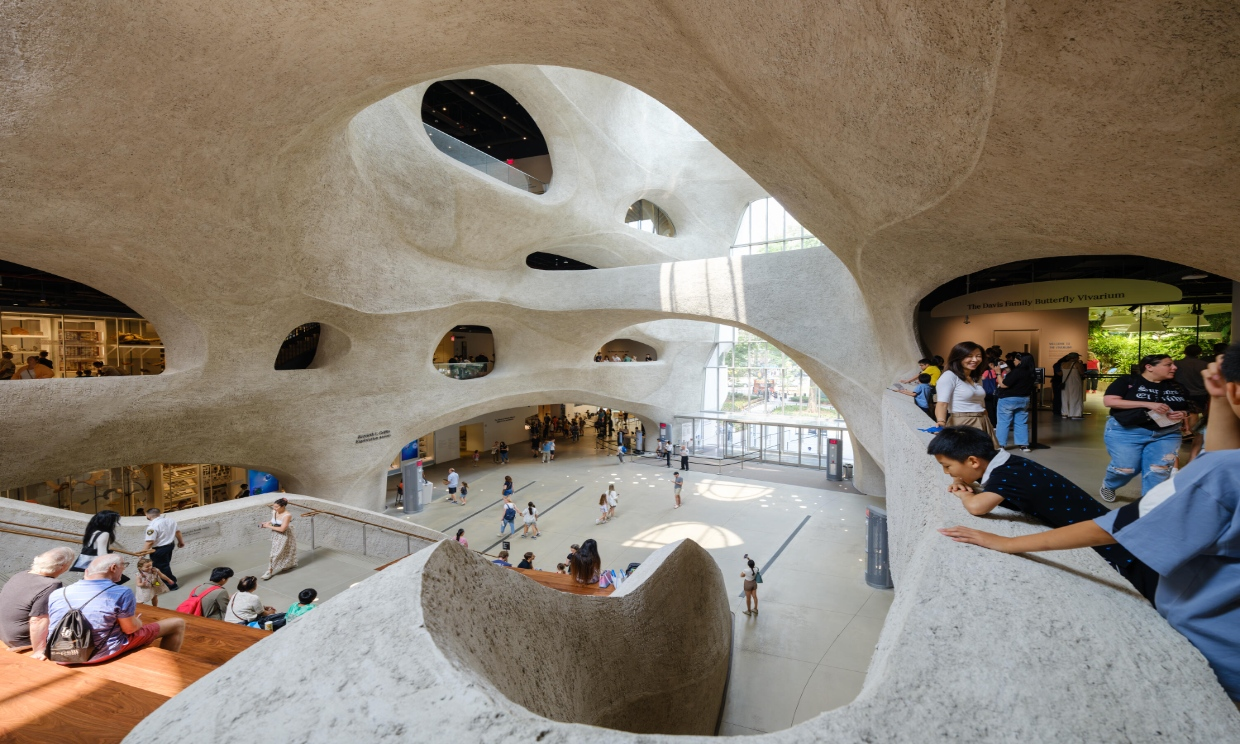

Engage your family’s curiosity
Urban Advantage and the Students of NYC
UA provides support for the teaching and learning of science in participating schools. This helps science teachers stay current with the best research-supported approaches to teaching science, ensuring that students in those classrooms are supported, engaged, and are actively contributing their ideas and perspectives.
As a result of a school's participation, families gain special access to our institutions: American Museum of Natural History, Bronx Zoo, Brooklyn Botanic Garden, New York Aquarium, New York Botanical Garden, New York Hall of Science, Queens Botanical Garden, Staten Island Zoo. UA does this to support the budding scientists of NYC, hoping that families will visit often, explore with curiosity, and feel at home in these NYC science-rich cultural institutions.
Participating science teachers provide the vouchers for admission and the instructions for reserving are below. If your school doesn't participate, free access hours are listed for each of our institutions as well.
Visit Institutions
Using your voucher to Visit Institutions
Families and students will receive their voucher from their UA-participating science teacher. Please inquire if you have not received a printed or emailed copy of your voucher.
Some institutions will require advanced reservation. Please explore the Visit Institutions section to see how to book your reservation at each institution before visiting with your voucher.
Using your voucher to Visit Institutions
Upcoming Events
During the school year, when vouchers are valid, the events listed on this page are free.
During the summer, these events may required additional payment.
During the school year, when vouchers are valid, the events listed on this page are free. During the summer, these events may required additional payment.
New York Aquarium
New York Aquarium
Tell us about your recent visit!
Doing Science
UA believes that science is all around us and that we are all scientists. We all make observations and ask questions, something that comes naturally to young learners, and is the first step when exploring the world. UA encourages maintaining this innate curiosity to learn and understand both our immediate communities and the wider world.
What can I Investigate? Will I Investigate on my own, or collaborate with others?
First, make observations and ask questions: What do I see outside my window? What do I notice in my community? What am I interested in learning more about? What do I see that I’d like to improve? Following options will guide you along a science path.
Doing a Science Investigation in a Small group or on your own
Investigate your own science question (the question comes from you and/or a small group)
Participate in a larger data collection effort, often addressing questions and priorities of a “Citizen Science” organization.
Address an important issue in your community or neighborhood.
Engineer a solution to a problem or challenge, possibly including a working prototype to illustrate your design in action.
How can I share my science?
You can share your science investigations in a variety of formats at UA’s Science EXPO! (Pick your own adventure!)
Sharing findings from an investigation of a student generated science question
This would be an investigation report. The investigation can take one of several formats including:
- Controlled Experiment
- Field Investigation
- Design Investigation
- Secondary Research
Could include, but not limited to
- Elements might include those below (students may choose to emphasize a particular science practice within this list):
- Title
- Question
- Hypothesis & Prediction
- Background Research
- Investigation Design
- Procedure
- Data & Analysis
- Conclusion
- Scientific Explanation & Argument
- Reflection
- Next Steps
- As described in Elements of an Investigation
Examples
- The effect of number of fins on the distance a straw rocket flies
- The effect of a change in the Zebra Mussel Population on the population of Unionidae in the Hudson river
- The effect of the percentage of sand in soil on the growth of marigold plants.
- The effect of air temperature on activity level of Gelada Baboons
Citizen science participation
Could include, but not limited to
- Descriptions and photos of activities associated with participation.
- Lessons learned about the phenomena and the nature of science through participation in the program.
- Any inspiration for future activity or research.
Examples
- Participation in projects like
Sharing of participation in projects contributing student data and observations to a larger data collection effort.
Monitoring the environment/neighborhood
Could include, but not limited to
- Why were you interested in monitoring this environmental factor?
- Descriptions and photos of activities associated with monitoring.
- Maps or diagrams of the area monitored with elements that might affect the factor(s) being monitored.
- Lessons learned about the phenomena and the nature of science through the monitoring process.
- Any inspiration for future research or action.
Examples
- Monitoring health-related indicators (such as air quality, particulates, temperature, etc.)
- Monitoring biodiversity (e.g. iNaturalist) which could include invasive-species sightings (e.g. recent Spotted Lanternfly initiatives)
- Schoolyard studies (could be similar to restoration projects like NWF’s Schoolyard Habitats project in section 4)
Sharing observations and tentative explanations after a period of monitoring and data collection in your neighborhood.
Community-connected science
Could include, but not limited to
- How you became aware of the issue to be addressed.
- Description of the issue.
- Description of what science concepts help you understand or explain the issue and how they help you address the issue.
- How community input was sought or gathered in understanding or developing a solution to the issue.
- Outcome of any applied solutions to the issue.
Examples
- Mitigation of a community environmental issue, such as a climate impact (flooding/permeable surfaces, vegetation cover) or other community priority.
- Restoration of a habitat: schoolyard, a wetland area, or another neighborhood habitat, oyster reef habitats: Billion Oyster Project
- Stewardship of a school or neighborhood habitat (example - Tree Bed Habitats with NYC Parks).
- A neighborhood mapping project to raise awareness about a topic (e.g. rain gardens, possible tool: Green Maps)
Participation in a project that uses some science concept to address an issue in your community or neighborhood.
Artwork
Could include, but not limited to
- STEM connected photography exhibit or exhibit of drawings, paintings, multi-media, etc.
- Description of science concepts and how the artwork is a reflection or elaboration on your understanding of the science or phenomenon.
Examples
- Climate crisis-related works of art
Presentation of studio art or photography connected to a STEM topic.
Design/engineering projects
Could include, but not limited to
- A physical model or prototype of an engineered solution.
- Description of the science concepts, or understanding of the system or design challenge, that lead to the proposed design.
- Photographs or video of the solution in action.
Examples
- Engineer a way to water your plants when you’re on vacation
- Engineer earthquake resistant shelving for your electronics.
- Design a habitat to sustain human life on Mars
- Design environmental enrichments for animals in human care
- Design a watershed restoration project- Design model: Implementation of planting trees which can showcase how to improve water quality and biodiversity (Visually demonstrate important concepts like pollution, erosion, and water management)
Engineered solutions by students, possibly including a functional prototype to illustrate the design in action.
Presenting a Demonstration of a Phenomenon
Could include, but not limited to
- A tabletop demonstration of a phenomenon.
- Explanatory text describing the phenomenon including relevant science concepts.
- Data tables or graphs of data gathered from or used to develop the demonstration.
Examples
- Storm surges, or effect of sea level rise on flooding at a specific coastal location
Physical demonstrations of a phenomenon with the related technical information, explanations and data when appropriate.
Models
Could include, but not limited to
- Scale models
- Diagrams
- Explanatory text to go with the model
*Students may also choose to present a model in progress or with revisions in thinking.
Examples
- Convection models illustrating weather phenomena
- Gut & bacteria model
3-D or 2-D models of a STEM-related structure or system.
STEM club activities
Could include, but not limited to
- Descriptions, photos and videos of activities carried out by the club or group.
- Descriptions of science understandings or knowledge gained through the activity.
- Maps of where the activity happened.
- Information about how the group is run, how you choose activities to engage in…
- Information about the tools you use and how they are used.
Examples
- Birdwatching,
- Grow-the-Moon (attempting to cultivate crops under different conditions),
- trips to see a phenomenon like an eclipse or the Aurora Borealis (documented with photos and explanations), aquaponics,
- school gardens
Sharing of activities of clubs or after school program activities.
STEM classroom activities
Could include, but not limited to
- Descriptions, photos and videos of activities carried out in the classroom activity.
- Descriptions of science understandings or knowledge gained or applied through the activity.
- Diagrams of the setup (tanks, lights, filters, classroom as a whole…).
- Information about the tools you use and how they are used.
- Information about how you learned together or from others in this process.
Examples
- What you learned by caring for classroom plants and animals.
- What science understandings or concepts help you in caring for carnivorous plants.
Observations and insights gained through direct experiences with classroom resources such as terraria, vivaria, aquaria (including photos–sorry, no live organisms at EXPO)
Nature of Science, Stories of people doing science: history & social studies connections
Could include, but not limited to
- These stories may be about people in your community.
- They may be generated through interviews with a person in your family or community.
- Think about highlighting a scientist or engineer from an underrepresented community or background
- Describe how the story illustrates any of the following “Nature of Science” aspects from Appendix H of the NGSS:
- Scientific Knowledge is Open to Revision in Light of New Evidence
- Middle School elements:
- Science is both a body of knowledge and the processes and practices used to add to that body of knowledge.
- Science knowledge is cumulative and many people, from many generations and nations, have contributed to science knowledge.
- Science is a way of knowing used by many people, not just scientists.
- Middle School elements:
- Men and women from different social, cultural and ethnic backgrounds work as scientists and engineers.
- Scientists and engineers rely on human qualities such as persistence, precision, reasoning, logic, imagination and creativity.
- Scientists and engineers are guided by habits of mind such as intellectual honesty, tolerance of ambiguity, skepticism and openness to new ideas.
Examples
- The story of Charles H. Turner’s investigation of cockroach behavior (1913) demonstrates that:
- Scientific Knowledge is open to revision in Light of New Evidence - in this case regarding the cognitive abilities of insects.
- Men and women from different social, cultural and ethnic backgrounds work as scientists and engineers. (in this case African American)
- In interviewing volunteers in our local community garden we documented how gardeners are constantly applying science practices and content knowledge as they figure out what the ecological needs are of plants (lighting, nutrients, moisture…) and how best to meet those needs.
Sharing of a story of someone doing science, the story should include or reflect on their questions, their processes, their evidence and their thinking.
It is important to include the connection between the science story and your/the student’s experience or interests in science.
What comes next? Science is rarely “finished”. What could you (or someone else) do next?
What do I do with my findings or proposals?
You can show your work to your community, to the CBOs you worked with, or in a letter to your local representative. You can ask for feedback and consider next steps. Continue learning!
Resources
Brooklyn Botanic Garden invites you and your families to our Community Day on this Friday, March 20. In honor of Women`s History Month, we will be highlighting the contributions of the women who worked in our science department hybridizing magnolia trees. You can expect a guided tour, access to our library and archives, and water color painting. Use your Student +3 vouchers for free access!
Brooklyn Botanic Garden invites you and your families to our Community Day on this Friday, March 20. In honor of Women`s History Month, we will be highlighting the contributions of the women who worked in our science department hybridizing magnolia trees. You can expect a guided tour, access to our library and archives, and water color painting. Use your Student +3 vouchers for free access! ...

❄️Midwinter recess is here!❄️
Don’t forget to use your vouchers to visit our institutions for free with your families over the break!
❄️Be sure to stop by @amnh ‘s Family Science Day this Thursday, February 19th from 11 AM - 2PM! Enjoy hands-on activities and crafts celebrating science, black history and lunar new year!
.
❄️¡Llegaron las vacaciones de invierno!❄️
¡No olviden usar sus vouchers para visitar nuestras instituciones gratis con sus familias durante las vacaciones!
❄️¡No se pierdan el Día de la Ciencia para Familias de @amnh este jueves 19 de febrero de 11:00 a 14:00! ¡Disfruten de actividades que celebran la ciencia, la historia afroamericana y el Año Nuevo Lunar!
#urbanadvantagenyc
❄️Midwinter recess is here!❄️
Don’t forget to use your vouchers to visit our institutions for free with your families over the break!
❄️Be sure to stop by @amnh ‘s Family Science Day this Thursday, February 19th from 11 AM - 2PM! Enjoy hands-on activities and crafts celebrating science, black history and lunar new year!
.
❄️¡Llegaron las vacaciones de invierno!❄️
¡No olviden usar sus vouchers para visitar nuestras instituciones gratis con sus familias durante las vacaciones!
❄️¡No se pierdan el Día de la Ciencia para Familias de @amnh este jueves 19 de febrero de 11:00 a 14:00! ¡Disfruten de actividades que celebran la ciencia, la historia afroamericana y el Año Nuevo Lunar!
#urbanadvantagenyc
...
Family Science Day is coming up at @amnh this Thursday, February 19th!
🔎Join us From 11 AM - 2 PM for hands-on activities and science discovery for the whole family to enjoy!
🎟️Don’t forget to bring your Family Science Day Flyer for free admission!
.
¡El Día de la Ciencia en Familia se acerca este jueves 19 de febrero en @amnh!
🔎 ¡Vienen de 11:00 a 14:00 para disfrutar de actividades prácticas y descubrimientos científicos para toda la familia!
🎟️¡No olvides traer tu flyer del Día de la Ciencia para Familia para entrar gratis!
#urbanadvantagenyc
Family Science Day is coming up at @amnh this Thursday, February 19th!
🔎Join us From 11 AM - 2 PM for hands-on activities and science discovery for the whole family to enjoy!
🎟️Don’t forget to bring your Family Science Day Flyer for free admission!
.
¡El Día de la Ciencia en Familia se acerca este jueves 19 de febrero en @amnh!
🔎 ¡Vienen de 11:00 a 14:00 para disfrutar de actividades prácticas y descubrimientos científicos para toda la familia!
🎟️¡No olvides traer tu flyer del Día de la Ciencia para Familia para entrar gratis!
#urbanadvantagenyc
...
The Finches!!! It was so exciting when I visited the Galapagos and saw these little birds that Darwin had thought about and tried to figure out. He eventually noticed some patterns and thought about what the plants were growing on these different islands, some dry, some wet, and what these little finches had available to eat.
What do you notice about the birds in these photos? Do you see them eating anything?
What did Darwin notice?
Celebrate Darwin’s birthday by looking at some beaks and birds in your neighborhood. And maybe other animals and plants and think about how they survive, what challenges they face and how they cope with those challenges.
Original voyage map:
© Sémhur / Wikimedia Commons / CC-BY-SA-4.0, or Free Art License. I added the yellow arrows and “Home” and enlarged “Galapagos”
@jholmesjay
The Finches!!! It was so exciting when I visited the Galapagos and saw these little birds that Darwin had thought about and tried to figure out. He eventually noticed some patterns and thought about what the plants were growing on these different islands, some dry, some wet, and what these little finches had available to eat.
What do you notice about the birds in these photos? Do you see them eating anything?
What did Darwin notice?
Celebrate Darwin’s birthday by looking at some beaks and birds in your neighborhood. And maybe other animals and plants and think about how they survive, what challenges they face and how they cope with those challenges.
Original voyage map:
© Sémhur / Wikimedia Commons / CC-BY-SA-4.0, or Free Art License. I added the yellow arrows and “Home” and enlarged “Galapagos”
@jholmesjay
...
Happy Darwin’s Birthday! Today, February 12th!
This is our 3rd post about the cool animals, habitats and landscapes that one might see and explore on this little cluster of islands, WAAAY out in the Pacific Ocean, off the coast of Ecuador. 💚 Darwin spent some time on these islands in 1835, 191 years ago. And many people visit these islands today to observe and learn from the special animals that live on these islands.
Today we will have two posts. First, check out all the different kinds of beaks on so many different kinds of birds! The Blue-footed Booby, Magnificent Frigatebird, Brown Pelican, Flightless Cormorant, penguins and the Brown Noddy are all fish eaters diving from the sky or swimming after their fishy dinner. Some beaks very long, often pointy, some with little hooks on the end to hold on to a squirming fish! I loved the Flightless Cormorants holding their tiny wings out to dry, just like their flying cousins here in New York. 🙂 they also have beautiful blue eyes, like gem
There are wadding birds, like the flamingos and Herons and Stilts with their long legs necks, and special beaks for catching different sorts of food as they wade through the shallow water.
Other birds were in the trees and the shrubs on land. Feeding on plants; their fruits, like the mockingbird here flying off with a fruit. Others, like the Flycatcher and warbler with their tiny pointy beaks, feeding on insects.
These were and are so many different kinds of birds. Different shapes, sizes and special legs or wings or feet helping them survive out here on the island. Darwin became particularly interested in groups of birds that seemed to be closely related, with subtle differences between them. More on that in our next post!
Original voyage map:
© Sémhur / Wikimedia Commons / CC-BY-SA-4.0, or Free Art License. I added the yellow arrows and “Home” and enlarged “Galapagos”
@jholmesjay
Happy Darwin’s Birthday! Today, February 12th!
This is our 3rd post about the cool animals, habitats and landscapes that one might see and explore on this little cluster of islands, WAAAY out in the Pacific Ocean, off the coast of Ecuador. 💚 Darwin spent some time on these islands in 1835, 191 years ago. And many people visit these islands today to observe and learn from the special animals that live on these islands.
Today we will have two posts. First, check out all the different kinds of beaks on so many different kinds of birds! The Blue-footed Booby, Magnificent Frigatebird, Brown Pelican, Flightless Cormorant, penguins and the Brown Noddy are all fish eaters diving from the sky or swimming after their fishy dinner. Some beaks very long, often pointy, some with little hooks on the end to hold on to a squirming fish! I loved the Flightless Cormorants holding their tiny wings out to dry, just like their flying cousins here in New York. 🙂 they also have beautiful blue eyes, like gem
There are wadding birds, like the flamingos and Herons and Stilts with their long legs necks, and special beaks for catching different sorts of food as they wade through the shallow water.
Other birds were in the trees and the shrubs on land. Feeding on plants; their fruits, like the mockingbird here flying off with a fruit. Others, like the Flycatcher and warbler with their tiny pointy beaks, feeding on insects.
These were and are so many different kinds of birds. Different shapes, sizes and special legs or wings or feet helping them survive out here on the island. Darwin became particularly interested in groups of birds that seemed to be closely related, with subtle differences between them. More on that in our next post!
Original voyage map:
© Sémhur / Wikimedia Commons / CC-BY-SA-4.0, or Free Art License. I added the yellow arrows and “Home” and enlarged “Galapagos”
@jholmesjay
...
Oops! I forgot to include the photo of our friendly cactus eating iguana! He is not pleased with me… he’s giving me the “side eye”….
Oops! I forgot to include the photo of our friendly cactus eating iguana! He is not pleased with me… he’s giving me the “side eye”…. ...
Getting closer! We are working our way to Darwin’s Birthday! 🎂 It is coming on February 12th!
We continue on@the Galápagos Islands. Darwin’s observations of plants and animals on the Galápagos Islands contributed some interesting evidence towards his thinking around “transmutation of species” later to become “evolution by natural selection”. Today I’ll share a couple of the non-bird vertebrates that I saw on my Galapagos visit. The first are the iguanas. Darwin described the two types. One very dark (they can warm up much better after a swim in the cold Pacific waters) they wade into the ocean and then swim underwater and nibble on seaweeds growing on the rocks. Then they crawl out of the ocean and warm themselves on the black lava rocks. You can see piles of them enjoying the warm sun. The other iguana lives on land and eats cactus and other plants. It has a pointier snout and is yellow and brown in color, some were hard to see because they blend in so well with the older rusty colored lava.
Another famous Galapagos reptile is the tortoise. The islands are named for them! “Galapagos” is originally from an ancient Iberian word for turtle. We saw tortoises up in higher elevations where there is more rainfall and the environment is very lush. Some were sitting in little streams or ponds drinking water. Darwin heard from the local people that they could tell which island a tortoise was from by the shape of their shell. This was an interesting observation for Darwin to try to figure out. Why would shell shape vary between islands?
I included one photo of an invertebrate today, a Sally Lightfoot Crab because I love the colors, and invertebrates are just so cool!
Next post we get into the birds, and they really had Darwin thinking!!
PS the first image is from Darwin’s book call “Journal of researches into the natural history and geology of the countries visited during the voyage of H.M.S. Beagle around the world “ Some people call it the “Vouyge of the Beagle” for short. 🙂 Or the “Journal of researches”
Getting closer! We are working our way to Darwin’s Birthday! 🎂 It is coming on February 12th!
We continue on@the Galápagos Islands. Darwin’s observations of plants and animals on the Galápagos Islands contributed some interesting evidence towards his thinking around “transmutation of species” later to become “evolution by natural selection”. Today I’ll share a couple of the non-bird vertebrates that I saw on my Galapagos visit. The first are the iguanas. Darwin described the two types. One very dark (they can warm up much better after a swim in the cold Pacific waters) they wade into the ocean and then swim underwater and nibble on seaweeds growing on the rocks. Then they crawl out of the ocean and warm themselves on the black lava rocks. You can see piles of them enjoying the warm sun. The other iguana lives on land and eats cactus and other plants. It has a pointier snout and is yellow and brown in color, some were hard to see because they blend in so well with the older rusty colored lava.
Another famous Galapagos reptile is the tortoise. The islands are named for them! “Galapagos” is originally from an ancient Iberian word for turtle. We saw tortoises up in higher elevations where there is more rainfall and the environment is very lush. Some were sitting in little streams or ponds drinking water. Darwin heard from the local people that they could tell which island a tortoise was from by the shape of their shell. This was an interesting observation for Darwin to try to figure out. Why would shell shape vary between islands?
I included one photo of an invertebrate today, a Sally Lightfoot Crab because I love the colors, and invertebrates are just so cool!
Next post we get into the birds, and they really had Darwin thinking!!
PS the first image is from Darwin’s book call “Journal of researches into the natural history and geology of the countries visited during the voyage of H.M.S. Beagle around the world “ Some people call it the “Vouyge of the Beagle” for short. 🙂 Or the “Journal of researches”
...
As we approach February 12th, the birthday of Charles Darwin, we thought it might be fun to walking in his footsteps a little, on and around the Galápagos Islands.
A few years ago I was very lucky and had the opportunity to visit the Galapagos, and I find it interesting, and hard, to imagine traveling back in time in someone’s footsteps. It is so hard not to be influenced by my own world. I try to imagine a 22 year old Darwin saying yes to go on a voyage around the world, away from home for what would turn out to be 5 years. No phone, no jet flight back in 24 hours or less. Travel then was on foot, on horse, trains were a newish thing… letters took months to get a reply… and it turned out, his stomach didn’t enjoy being at sea. He didn’t have a cabin, he slept in a hammock hanging above the Captain’s chart table in a room that was about 10 feet by 10 feet (the table took up most of the room). He left home in December of 1831 and arrived in the Galapagos in September 1835, it had been almost 4 years away from home and family.
This first post is just to give you an idea of what the islands look like. They’re a cluster of volcanic peaks sticking up out of the deep Pacific Ocean. Some so young they’re mostly volcanic cinders and ropy lava rock, some cactus and scrubby brush. Others are taller and wetter with green vegetation and some have forest cover.
In posts over the next few days we will step onto some of these islands and think about what we see and what Darwin noticed.
Original voyage map:
© Sémhur / Wikimedia Commons / CC-BY-SA-4.0, or Free Art License. I added the yellow arrows and “Home” and enlarged “Galapagos”
As we approach February 12th, the birthday of Charles Darwin, we thought it might be fun to walking in his footsteps a little, on and around the Galápagos Islands.
A few years ago I was very lucky and had the opportunity to visit the Galapagos, and I find it interesting, and hard, to imagine traveling back in time in someone’s footsteps. It is so hard not to be influenced by my own world. I try to imagine a 22 year old Darwin saying yes to go on a voyage around the world, away from home for what would turn out to be 5 years. No phone, no jet flight back in 24 hours or less. Travel then was on foot, on horse, trains were a newish thing… letters took months to get a reply… and it turned out, his stomach didn’t enjoy being at sea. He didn’t have a cabin, he slept in a hammock hanging above the Captain’s chart table in a room that was about 10 feet by 10 feet (the table took up most of the room). He left home in December of 1831 and arrived in the Galapagos in September 1835, it had been almost 4 years away from home and family.
This first post is just to give you an idea of what the islands look like. They’re a cluster of volcanic peaks sticking up out of the deep Pacific Ocean. Some so young they’re mostly volcanic cinders and ropy lava rock, some cactus and scrubby brush. Others are taller and wetter with green vegetation and some have forest cover.
In posts over the next few days we will step onto some of these islands and think about what we see and what Darwin noticed.
Original voyage map:
© Sémhur / Wikimedia Commons / CC-BY-SA-4.0, or Free Art License. I added the yellow arrows and “Home” and enlarged “Galapagos”
...